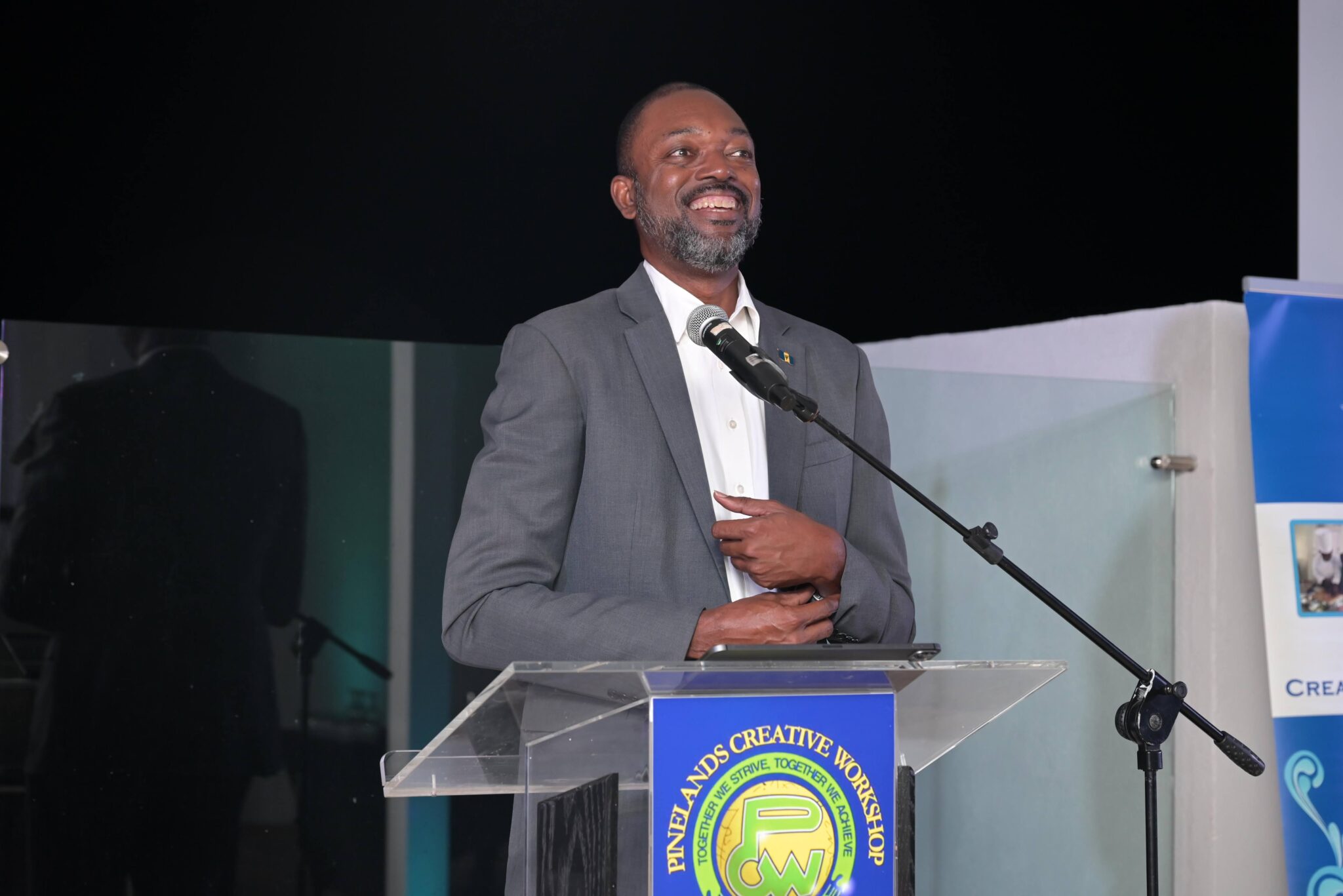


“If Barbados is to be a powerful nation going forward, our people must be able to not only take knowledge, but to apply that knowledge to solutions in the world.” These were the words of the Minister of Educational Transformation, The Honorable Chad Blackman as he addressed parents and members of the St. Michael North community gathered at the Eden Lodge Primary School last Sunday, August 16, 2026 during his presentation of updates on Barbados’ Education Transformation initiative. Many changes, both underway and set to take place in the near future, within this overhaul of the island’s national school system were given a deep dive.
This community meeting was hosted by the Member of Parliament for the St. Michael North constituency and Minister of State in the Ministry of Health and Wellness, Dr. The Honorable Davidson Ishmael.
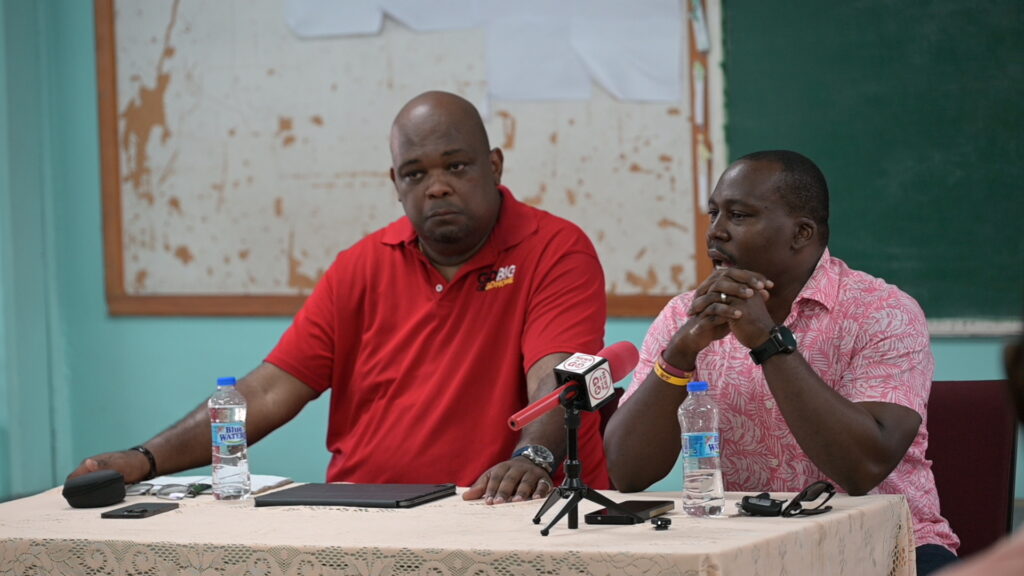
Minister Blackman proclaimed “Education transformation is important for all of us. A lot has been happening, a lot of discussions, a lot of views, a lot of ideas, a lot of perspectives. But I want to take you through a journey to help you understand what is happening, why it is happening, and how do you get involved, whether you are a parent, a teacher, a business, or a community group.”
Reflecting on how well the country has done over the last 60 years, Minster Blackman attributes that success largely, among other things, to education taking the country forward.
“We as a ministry, we cannot do it alone, but we are leading the effort in ensuring that we decolonize the education system.”
Changes in effect from September 2026
Minister Blackman: “The world has changed and continues to change. There is a link to national development. This is about national development through education. In order for us to continue to be a competitive country, to provide the quality of life that we want, we have to do the foundational things.”
Minister Blackman announced the introduction of play-based learning, project-based learning, chess, refurbishing and building of new infrastructure, modernizing the delivery of education–particularly the teaching of mathematics, a national breakfast program in public primary schools, the two-year assessment period for determining assigned secondary schools, curriculum reform, new digital applications and platforms, and community service learning.
Play-based Learning
Starting this September, there will be universal access to early childhood education. This means, the Government has made the decision, given the collected data, that prior to a child entering primary school, they will have access to early childhood education, free of cost to the parents.
Early childhood education is more than “day care”. The curriculum for early childhood education, through play-based learning, will allow Barbadian children to learn new things and build on the necessary skills to be able to earn confidence and the cognitive ability to learn even more as they enter primary school. Play-based learning is popular in countries like Singapore, China, South Korea, Rwanda in Africa, and a number of European countries, and the United Arab Emirates. These countries’ societies and economies grow at rapid paces which is attributable to the foundational elements they put in place over 20 years ago.
The introduction of Chess
Critical thinking is part of what is being implemented as part of the transformation. It is described as more than giving children the ability to recall information, something our society has perfected through the passing of some written exams. Minister Blackman explained that recall does not give one critical thinking, and stated that children need critical thinking to be able to navigate life. Hence, from September 2026, chess is being introduced in schools across Barbados.
Following the Minister’s visit to the Chess in Education 2025 conference hosted by the International Chess Federation, having further recognised the link between societies where chess is present in schools and the advancement of those economies, it was decided that Barbados must also create that link.
“The idea of it is to give every child in Barbados the ability to think three and four and five steps ahead of any circumstance that they may come to in life.”
Modernizing the delivery of Education
“A lot of what we have done is still taught in a way that is not as modern as it can be.” says Minister Blackman.
The Erdiston Teacher’s Training College is undergoing a process to ensure that our teachers are given the best ability to teach, particularly subjects like mathematics. Upon review, engagement with mathematics surfaced as a major area for concern.
The use of artificial intelligence and further training of teachers are also in motion.
Breakfast Programs
“If a child is hungry, all we’re trying to get that child’s mind to grasp and to seize and to do, as we say in Barbados, gone through the edoes. Therefore we have made a determination that from this September, we are rolling out a national breakfast program at the public primary school level.”
The Government is in partnership with private sector organisations who wish to continue operating breakfast programs and support these initiatives so as to not stop philanthropy and allow those who wish to give and help, to do so.
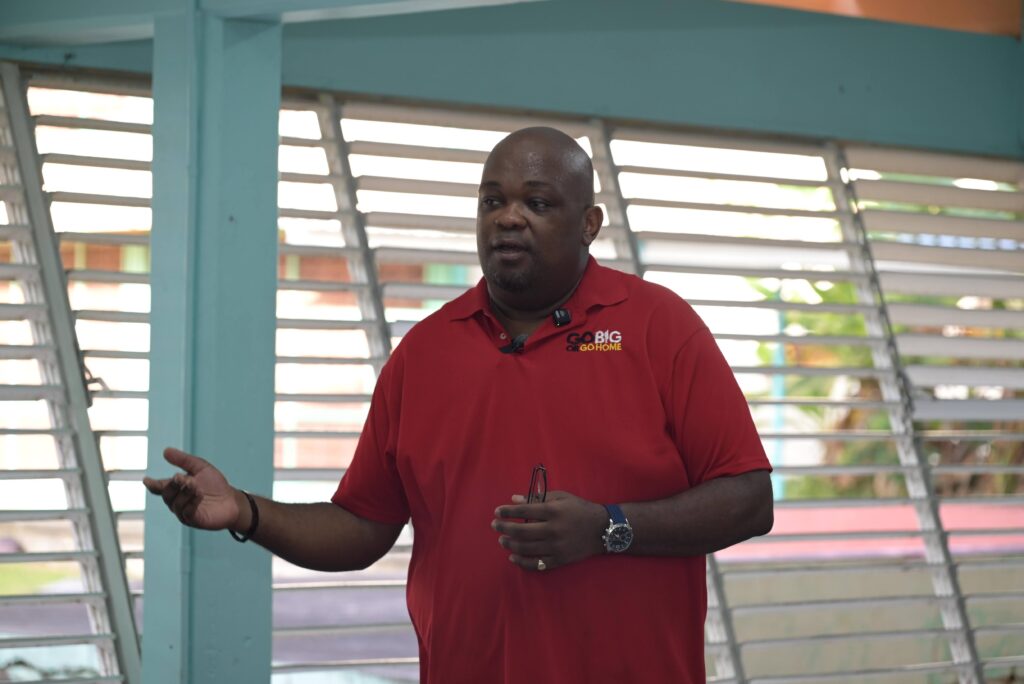
Parent-education Program
Introduced in the second quarter of 2026 in partnership with the Inter-American Development Bank, the parent-education program was produced to give parents the skills and tools to understand the educational transformation taking place and how they as parents can contribute. This goes beyond homework help and helps parents understand the attitudes their children should have in today’s world while also helping the children understand all of the different systems and tools that will be helpful to them.
“Being in the school will take the children so far and no farther. But if we do all of the different changes in school and then the child goes back into an environment where there is not the necessary support and help, back at square one again.”
Infrastructure and New Schools
During this summer 2026 the Ministry embarked on the fixing of 35 schools across Barbados. Most of Barbados’ public schools are between 50 to 200 years old. Minister Blackman stated that eight weeks of summer vacation is not enough time to do major reconstruction to our schools, therefore, there will be ongoing work at the schools throughout the year; on weekends, bank holidays and all holiday periods to ensure schools are refurbished and maintained.
The new model of education includes change from the typical square room to a more circular approach designed for higher levels of engagement.
The Minister reminded of his commitment to the country that “the public must get their due.” Highlighting that most of the island’s schools are used as hurricane shelters, Minister Blackman reinforced that they should be modern and fit for purpose to the right standards to withstand the elements.
Minister Blackman also announced that a number of new schools will be built across Barbados. Referencing the Oceana Innovation Hub opened in July 2025 as a school that helps our children understand the ocean, its challenges and opportunities, and how we can preserve what we have in the ocean. The Barbados Climate school, a sister-school to the Oceana Innovation Hub, is set to open in 2027 in Chelston, St. Michael, with focus on climate and climate diplomacy.
Curriculum Reform
The Ministry has added the teaching of Barbados’ history of excellence. Many Barbadians have created inventions or produced results in varying industries that led to significant change on a global scale, and it is important that our children are taught these lessons so that they may develop a greater sense of national pride.
“We have revered so much, things external, that we have overlooked overtime, things here that have caused us to be great and to give us that confidence that–not only are we great–but we have a DNA of excellence that we must now coordinate.” says Minister Blackman.
From September 2026, Community Service Learning (CSL) will be integrated into the school curriculum, rather than being added as an optional, extra-curricular activity. This means that all students must join a uniform organization, a civic-based organisation, or a team sport in order to complete their secondary school education. The purpose of this is to ensure students leave school with a level of consciousness about their country, about the importance of giving back, the importance of working with their peers; and therefore instilling in all students in Barbados, the sense of nationhood, irrespective of what type of student they are. The CSL requires the student to complete 60 hours in their final academic year in order to complete the program. This program carries the slogan “60 years at 60” as we recognize the island’s upcoming 60th year of Independence.
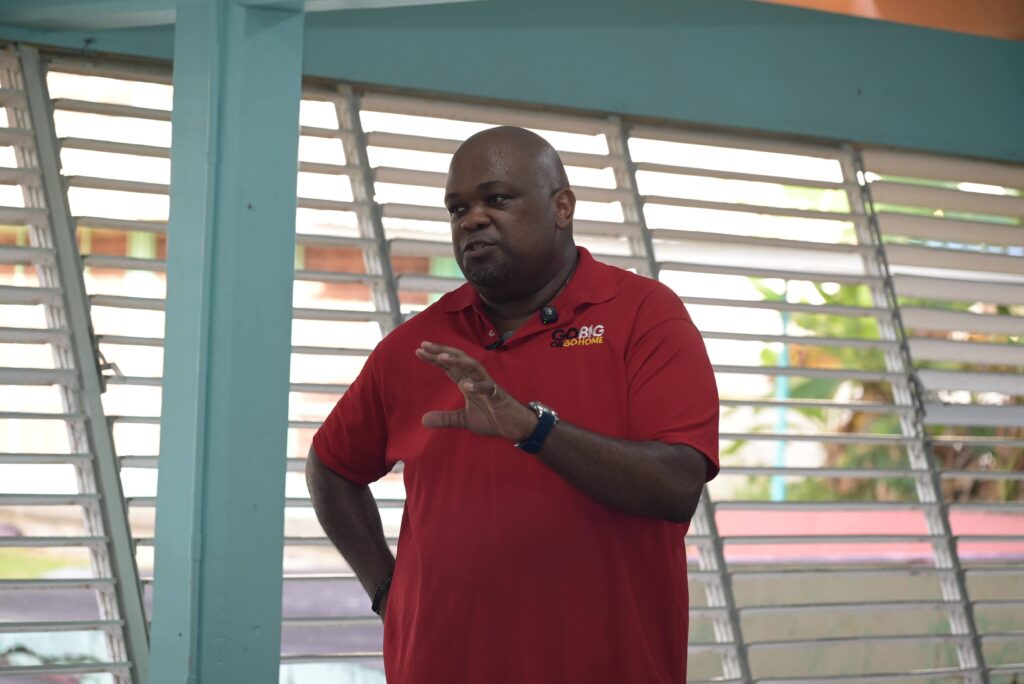
Minister Blackman also discussed the issues of punctuality and discipline, a zero tolerance for bullying, the partnership with the School Meals Service to modernize and increase the nutrition in the meals served at schools, and new digital applications and platforms to allow for the tracking of each child’s development and cognitive health, for teachers to share ideas and research to strengthen our knowledge pool, and for students to share their ideas.
A lot of new and exciting changes are coming to Barbados’ education system and the Minister of Education Chad Blackman is open to educating, informing, and partnering with parents, educators, businesses, and communities that share the same love and hope for our children, the school system, and the future economy of Barbados.